
Zerodha Completed 15 Years: Lessons in Building India’s Most Disruptive Fintech
Discover how Zerodha’s founders built India’s leading fintech by focusing on tech-driven growth, culture, and resilience. Read insights from their 15th anniversary AMA and learn powerful lessons for startups and investors.
 Editor
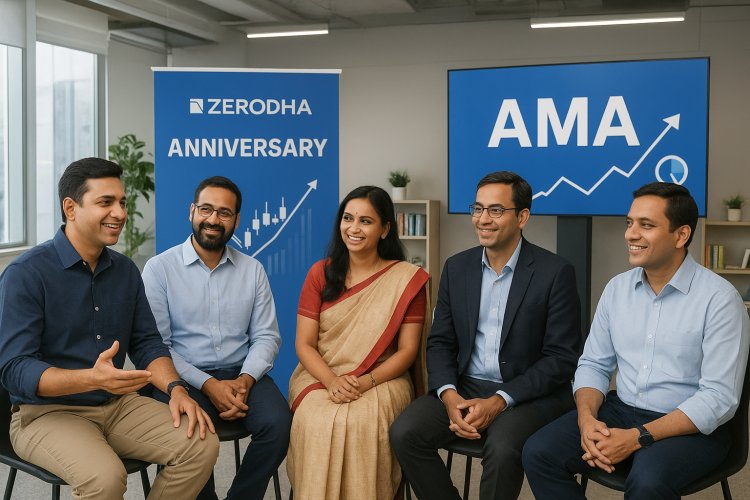
Zerodha’s 15th anniversary marks a significant milestone in India’s financial landscape, celebrated with a candid Ask Me Anything session featuring its founding team: Nithin Kamath, Nikhil Kamath, Kailash Nadh, Venu Madhav, and Karthik Rangappa. Their conversation offers invaluable insights into building a resilient, innovative, and customer-first financial technology company. This case study explores key themes from the AMA, including strategic decisions, business philosophy, regulatory challenges, diversification, and the human side of entrepreneurship.
Starting Small and Scaling Big
Zerodha began in 2010 as a technology-driven broking firm, focused on simplifying investing for Indians. Early on, the founders prioritized transparency and customer trust over aggressive marketing—a decision that gave them longevity and a loyal user base. Today, Zerodha manages over ₹6.5 lakh crore in customer assets, reflecting a shift in public appetite for market participation and digital finance.
Zerodha Strategic Diversification
The team discussed their evolution from pure broking to a financial conglomerate. Zerodha branched out cautiously—partnering with insurtech Ditto, launching an NBFC for loans against securities, and building an asset management business with Smallcase. Their philosophy favors organic growth and nurturing young businesses rather than pursuing aggressive acquisitions, citing culture clashes and risk misalignment as challenges with mergers.
Zerodha Navigating Regulation and Market Disruption
Recent years brought significant headwinds: regulatory changes in transaction charges and options trading volume impacted revenues, forcing Zerodha and its competitors to reconsider business models. Despite a flat year, Zerodha maintained its stance against charging for equity delivery trades, preferring incremental adaptation over reactionary measures. The team emphasized prudent risk management and incremental innovation as coping mechanisms during market volatility.
The NBFC Debate: Lending with Responsibility
One heated topic was the future of unsecured lending in India. Nikhil advocated for expanding access to credit, suggesting unbanked and underbanked populations as growth frontiers. In contrast, Nithin warned against growing too fast into unsecured lending, citing risks of defaults and operational headaches in recoveries. They agreed on the need for responsible lending and leveraging technology and regulation to build trust and mitigate risk.
The Philosophy Of Zerodha: First Principles and Open Debate
Zerodha’s culture is rooted in first principles thinking—preferring to build in-house, iterate patiently, and respect market forces. Philosophical alignment is balanced with constructive internal disagreements. The five CXOs articulated how their divergent views actually fuel innovation, prevent groupthink, and foster a resilient organization. They believe businesses should be built slowly, with cultural alignment, rather than chasing rapid scale at any cost.
Active vs Passive Investing and the Role of AI
As Zerodha entered asset management, the founders championed passive funds, believing lower fees and broad exposure best serve retail investors. They acknowledged that while active management may thrive in bear markets, India's long bull run favored passive strategies. The team also deliberated on the future of trading and fund management amid democratized information and AI, concluding that human emotion still drives markets—a factor machines struggle to model.
How Zerodha Respect for Traders and Market Structure
The panel voiced strong support for traders, pushing back on regulatory and societal narratives that demonize trading. They argued for leveling the playing field between retail and professional traders, rationalizing tax structures, and addressing collocation and HFT (High Frequency Trading) advantages. According to Zerodha, traders play a vital role in price discovery and market liquidity, and they deserve respect—not stigmatization.
How Zerodha Building Culture, Talent, and Social Impact
Hiring at Zerodha is purpose-driven, focusing on cultural fit and intrinsic motivation over credentials. They invest in education, open-source technology, and social entrepreneurship through Rainmatter Foundation, underlining their commitment to lasting impact beyond profits. The founders see business as a long-term journey, often measured in decades rather than quarters.
Conclusion
Zerodha’s story embodies the power of patience, principled risk-taking, cultural alignment, and bold vision. Their journey offers powerful lessons for startups: build with purpose, balance ambition with realism, nurture open debate, and never lose sight of the customer and the wider societal impact of technology.